
Graph Application Development
Graph application development tools sit above graph databases, giving teams practical environments to build, operate, and use graph-powered applications. IDEs, no-code/low-code platforms, and ontology editors simplify the building, deployment, and management of graph-powered applications by turning graph models into workflows, consoles, and analytical workspaces that teams rely on day to day.
This catalog focuses on current graph clients, application platforms, graph‑powered analytical environments, and ontology/taxonomy editors that operate on top of existing graph stores. It also includes tools for designing and maintaining semantic structures – schemas, SHACL shapes, taxonomies – that power knowledge graphs.
To be included, an offering has to meet three criteria:
- Graph-native application layer: The tool understands graph data models natively (nodes, edges, properties, RDF triples) and speaks graph query languages (Cypher, SPARQL, Gremlin, GSQL) as a first-class capability. It does not replace the underlying graph store as the system of record. This is what distinguishes graph app development tools from generic low-code platforms that happen to support a graph connector.
- Durable application environment: Serves as a repeatable environment for building, running, and maintaining graph-powered tools and workflows. Its main role is to support ongoing applications, investigations, or workflows – not one-off demos, static viewers, or thin admin consoles.
- Clear deployment model: Has a documented deployment story (SaaS, on-prem, self-hosted, containers) so architects can evaluate how it fits into an existing stack. Supported graph backends are explicitly named.
Tech Professionals | Analysts and Investors | Vendors and Builders
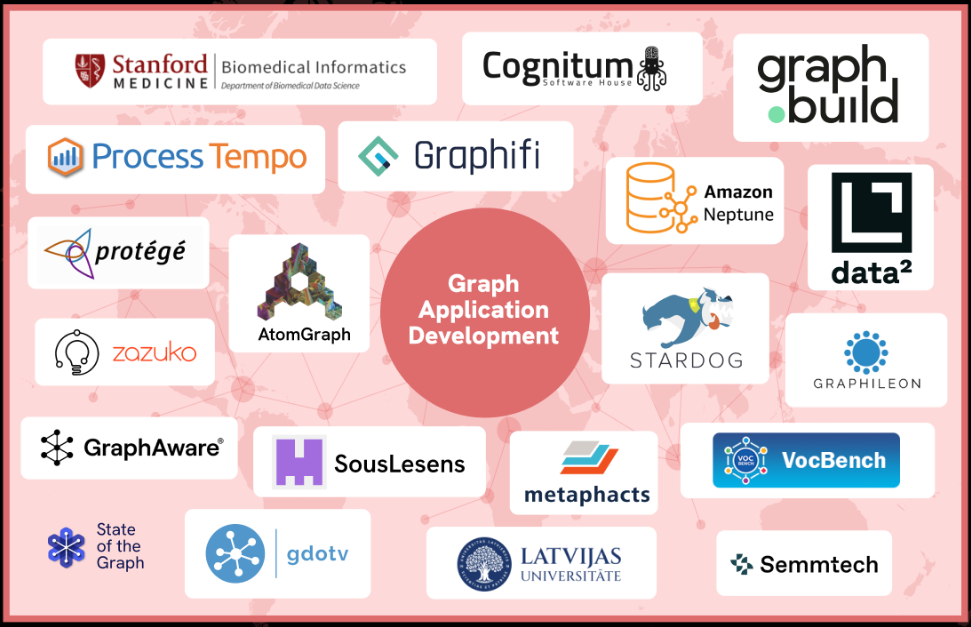
The table summarizes these tools across key dimensions so you can quickly see where each product fits and which merit a deeper look.
Dimensions include tool type, primary users and use cases, deployment and availability, supported graph backends, data models and query languages, degree of no‑code / low‑code support, visual application builder capabilities, visualization depth, and industry focus.